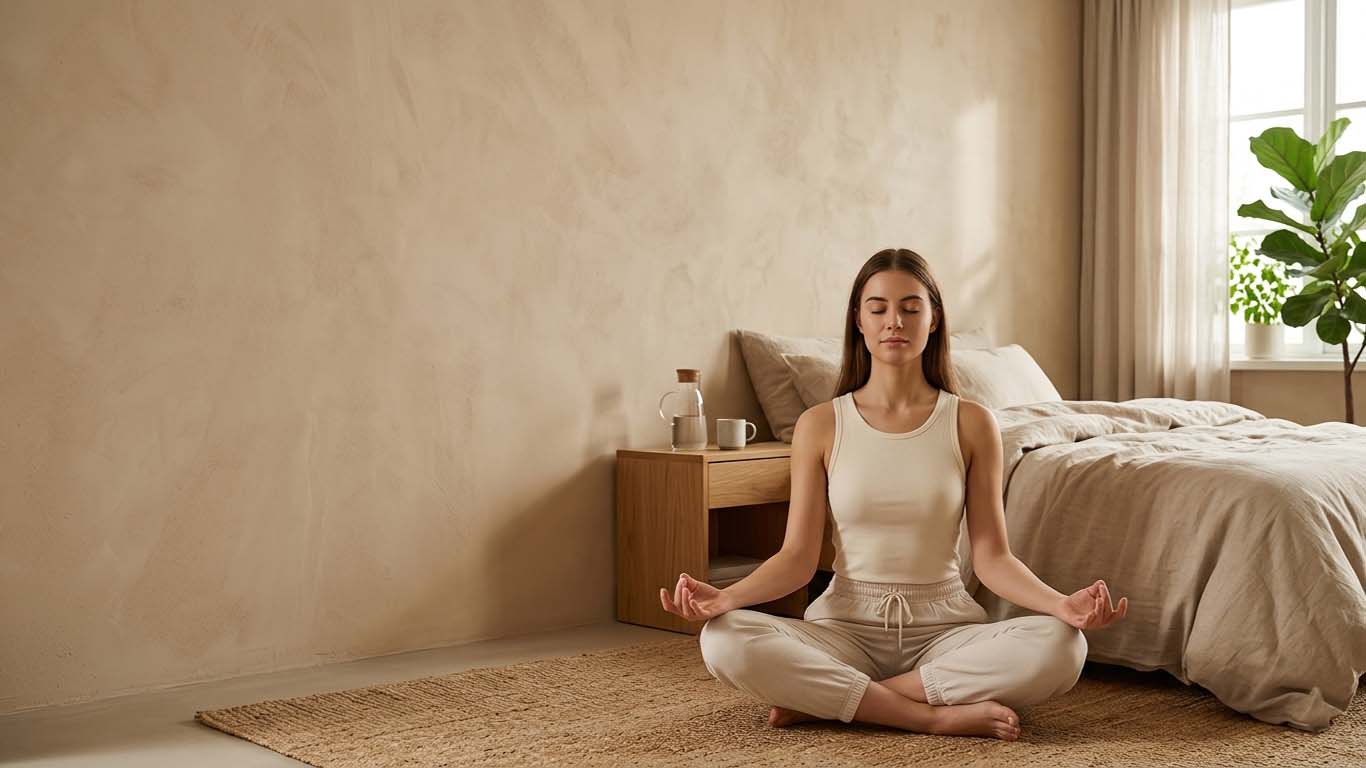
Need quick stress relief? Learn guided meditation tips, benefits & short daily sessions that help reduce anxiety, calm your mind & improve focus.
You’re juggling deadlines, family life, and a constant stream of notifications. Stress isn’t just an occasional guest—it’s moved in. Meditation offers a fast, evidence-based way to lower stress, sharpen focus, and sleep better without expensive gear or long retreats. In Tier One markets like the US, UK, Canada, and Australia, professionals use short, guided sessions during commute breaks, lunchtime resets, or evening wind-downs to stay productive and calm.
The good news: you don’t need perfect silence or an empty mind. You need a simple routine that fits real life—2 to 10 minutes, most days, with a few techniques you can do at your desk, on a train, or before bed. This guide gives you practical meditation tips, step-by-step methods, and quick routines for anxiety and burnout. You’ll also get tables, case-study snapshots, and micro-CTAs so you can act today.
Whether you’re a beginner, a student under pressure, or a remote worker chasing clarity, these tools meet you where you are. Start with breath, anchor your attention, and build consistency with tiny wins. Within a week, you’ll notice less reactivity and more mental space; within a month, better sleep and steadier focus. Let’s make calm your competitive edge—starting now.
Meditation for Beginners: 20 Practical Tips to Master Mindfulness & Boost Focus
New to meditation? Keep it simple and doable. Aim for tiny daily reps, not marathon sessions. Here are 20 practical tips you can apply in Tier One contexts—home office, train carriage, uni library, or open-plan workplace:
- Start with 2 minutes.
- Use breath as your anchor.
- Sit comfortably (chair is fine).
- Keep spine tall but relaxed.
- Close eyes or soften gaze.
- Count breaths 1–10, then reset.
- Expect mind-wandering; label thinking, return to breath.
- Use a gentle phone timer.
- Try guided audios for structure.
- Pair with a daily habit (coffee, commute).
- Track streaks for motivation.
- Note one benefit after each session.
- Use earplugs or noise-cancelling if needed.
- Try micro-meds (60–120 seconds) before meetings.
- Practice at the same time daily.
- End with a slow exhale and one intention.
- Be kind to yourself on messy days.
- Increase by 1–2 minutes weekly.
- Mix techniques: breath, body scan, loving-kindness.
- Celebrate consistency over intensity.
Quick Comparison Table — Beginner Options
| Option | Best For | Time | Key Tip | Likely Result |
| Breath Counting | Focus & calm | 2–10m | Count 1–10, repeat | Fewer racing thoughts |
| Body Scan | Tension release | 5–10m | Sweep attention toe→head | Relaxed body awareness |
| Loving-Kindness | Mood & empathy | 5–10m | Repeat kind phrases | Softer self-talk |
How to Meditate in 7 Simple Steps for Stress-Free Living & Better Productivity
Meditation is a skill: learn the steps, not just the concept.
- Pick a time (morning, lunch, or pre-sleep).
- Choose a seat (chair, sofa edge). Feet grounded.
- Set a tiny goal (2–5 minutes to start).
- Breathe naturally and notice the inhale/exhale at nose or belly.
- Label distractions ( thinking, planning, hearing ) and gently return.
- End with one intentional breath and a micro-commitment ( I’ll pause before my next call ).
- Log it (notes app or paper tick). Streaks matter.
Troubleshooting Table
| Challenge | What’s Happening | Fix in 30 Seconds |
| Restless legs | Sympathetic arousal | Shorten session; do 3 slow exhales |
| Sleepy | Parasympathetic dip | Open eyes slightly; sit more upright |
| Busy mind | Normal cognitive load | Label thinking, return to breath |
| No time | Habit not cued | Attach to coffee or calendar slot |
Result: Within 7–10 days, most beginners report calmer reactions and quicker recovery after stress spikes.
The Benefits of Meditation for Mental Health, Sleep & Workplace Performance
Meditation changes how you relate to thoughts and stress, which improves mental health and performance outcomes relevant in US/UK/CA/AU workplaces.
Mental Health: Regular practice reduces perceived stress, eases anxiety symptoms, and supports mood regulation by improving attentional control and emotional labeling. You become less fused with racing thoughts and catastrophic what-ifs.
Sleep: Pre-bed body scans and slow-exhale breathing increase parasympathetic activity, lowering heart rate and helping you fall asleep faster. Many professionals find fewer 3 a.m. wakeups after 2–3 weeks of nightly 5-minute sessions.
Workplace Performance: Mindfulness boosts sustained attention, working memory, and task switching. The effect is subtle but practical: fewer mistakes under pressure, smoother handovers, and calmer communication in cross-functional teams.
Benefits Snapshot — What Most Professionals Notice
| Area | Typical Change (4–6 weeks) | Tier One Context |
| Stress reactivity | Faster cool-down after triggers | Client calls, service escalations |
| Focus | Longer concentration blocks | Coding, budgeting, legal drafting |
| Sleep | Quicker onset, fewer wakeups | Jet lag, shift work |
| Communication | Less defensive tone | Remote/hybrid collaboration |
Key Tip: Pair a 3-minute breath set before high-stakes tasks (presentations, interviews).
Takeaway: Small, consistent practice yields compounding gains across mood, sleep, and output.
Meditation Habits for Busy Professionals — Improve Clarity, Focus & Decision-Making
You’re time-poor; your routine must be friction-free.
Design for Zero Excuses: Keep it visible (sticky note on monitor), available (earbuds on desk), and tiny (2 minutes). Use the if-then formula: If I open my email, then I do 6 slow breaths.
Contextual Routines:
- Commute (train/bus): Eyes open, count 10 breaths per station.
- Desk reset: 90-second box breathing (4-4-4-4).
- Between calls: 3 sigh-exhales to dump tension.
- Evening: 5-minute body scan before screens off.
Mini Case (UK Sales Lead): 10 weeks of 3-minute pre-call meditations reduced post-call rumination and improved weekly close rates (self-report) due to calmer listening.
Habit Builder Table
| Lever | Example | Why It Works |
| Cue | After calendar reminder | Automatic trigger |
| Ability | 2–3 minutes only | Always doable |
| Reward | Tick on habit app | Immediate dopamine |
| Identity | I’m a calm pro | Sustains long term |
Expert Insight: Decisions improve when you notice bodily stress signals early. Meditation sharpens interoception, so you pause before reacting.
Meditation Tips for Students & Young Adults Facing Burnout & Academic Pressure
Study loads, gig work, and social pressure spike cortisol. Meditation can be your low-cost buffer.
Study Flow: Do a 2-minute breath set before each 25-minute Pomodoro. Attention stabilizes and recall improves.
Exam Anxiety: 3-minute box breathing right before entering the hall; on tough items, pause for one slow exhale before re-reading.
Sleep Debt: Try a 5-minute body scan with longer out-breaths to downshift.
Social Stress: Loving-kindness phrases ( May I be steady; may others be well ) soften self-criticism and comparison loops.
Student Toolkit — Quick Menu
| Situation | Technique | Script | Outcome |
| Pre-study | 10 breaths | In…2…3… out…2…3… | Settled focus |
| Mid-panic | 4-7-8 breathing | In-4, hold-7, out-8 | Rapid calm |
| Pre-sleep | Body scan | Relax toes… calves… | Easier sleep |
| Overthinking | Labeling | Thinking… returning | Less spiraling |
Mindfulness Training Programs — Improve Leadership, Focus & Communication
Mindfulness programs (corporate or independent) package core skills—attention training, emotion regulation, and conscious communication—into structured modules. For leaders and team contributors across US/UK/CA/AU, these skills translate into clearer strategy and fewer interpersonal flare-ups.
Pros: Clear framework, peer accountability, expert Q&A, measurable modules (surveys, check-ins).
Cons: Time commitment, variable instructor quality, one size pacing.
Program Snapshot
| Feature | What to Expect | Practical Upshot |
| Weekly sessions | 45–60 minutes live/virtual | Habit continuity |
| Daily micro-practices | 3–10 minutes | Fits calendars |
| Communication drills | Intent listening | Fewer escalations |
| Metrics | Stress/focus check-ins | Visible progress |
Expert Insight: Programs that include difficult conversation roleplays create the biggest workplace gains because calm attention plus kind clarity de-escalates quickly.

Breathing Techniques for Meditation — Lower Stress & Improve Energy Levels’’
Breath work is your fastest dial for the nervous system.
- Box Breathing (4-4-4-4): Even in/out/holds balances calm and alertness—ideal pre-meeting.
- Extended Exhale (In-4, Out-6–8): Lengthening the out-breath boosts parasympathetic tone, helpful for anxiety and sleep onset.
- Physiological Sigh (In, top-up sniff, long exhale): Quickly reduces chest tightness.
- 4-7-8: Gentle sedation effect; use before bed.
Chooser Table
| Goal | Technique | Time | Where |
| Meeting calm | Box | 1–3m | Desk |
| Panic dial-down | Physiological sigh | 30–90s | Corridor |
| Sleep | 4-7-8 | 2–4m | Bed |
| Energy lift | 3 deep inhales | 30s | Outdoors |
Expert Insight: Don’t chase perfection—aim for smooth, silent nasal breathing and a longer exhale.
Finding a Comfortable Meditation Space — Enhancing Calmness at Home or Workplace’’
You need comfort, not candles. A supportive chair, neutral lighting, and minimal interruptions matter most. At work, face a wall or corner to reduce visual noise; at home, pick a quiet nook or sit up in bed.
Practical Setup
| Element | Budget Option | Upgrade |
| Seat | Regular chair | Cushion + lumbar support |
| Noise | Earplugs | ANC headphones |
| Light | Natural window light | Warm lamp, low glare |
| Reminder | Sticky note | Smart routine (phone shortcut) |
Personalized Meditation Coaching — Boost Productivity & Emotional Intelligence
A coach shortens your learning curve, identifies your sticking points, and tailors methods to your goals (e.g., sleep, exam nerves, leadership presence). Expect brief weekly check-ins, session notes, and targeted home practices.
Pros: Fast feedback, accountability, customization.
Cons: Cost, scheduling, fit matters.
Coaching Map
| Area | Coaching Focus | Likely Wins |
| Focus | Attention drills | Fewer tab-hops |
| Stress | Breath + labeling | Calmer responses |
| Sleep | Pre-bed routine | Faster onset |
| Leadership | Listening + pauses | Better decisions |
Expert Insight: The best coaches teach micro-interventions you’ll actually use under pressure.
How to Build a Meditation Routine — Simple Beginner Guide for Tier One Users
- Pick a same-time slot (after coffee).
- Keep it 2–5 minutes for week one.
- Use breath counting; label distractions.
- Track streaks (calendar ticks).
- Add 1 minute each week until 10 minutes.
- Create back-up slots (commute or pre-sleep) for busy days.
- Revisit goals monthly.
Checklist (print-friendly)
□ Seat ready □ Timer set □ Technique chosen □ Cue set □ Backup time defined □ Log visible
Why Meditation Reduces Stress — Scientific Explanation & Practical Benefits
Stress is your body’s alarm. Meditation trains your attention to notice the alarm earlier and to regulate breath and muscle tension, shifting your nervous system from fight-or-flight toward rest-and-digest. Practically, this means fewer adrenaline spirals, steadier heart rate, and more choice in how you respond. Over time, you strengthen attentional networks and emotion regulation skills, so triggers feel smaller.
Meditation Techniques for Anxiety, Burnout & Overthinking’
Anxiety: 4-7-8 breathing + labeling ( anxious thought… returning ).
Burnout: Body scan + compassionate phrases ( It’s okay to rest ).
Overthinking: Single-point focus (breath or ambient sound) + written brain dump after.
Tip: Start with 2–4 minutes, then extend as relief grows.
How to Combine Yoga & Meditation for Faster Mental Wellness
- Flow + Sit (15m): 10 minutes gentle yoga to release tension, then 5 minutes seated breath work.
- Desk Yoga (5m): Neck rolls, shoulder openers, then 2 minutes of box breathing.
- Evening Yin + Body Scan (12m): Slow hip openers, then guided scan for sleep.
Result: Looser muscles, quieter mind, easier focus.
How to Make Mindfulness a Habit — Step-by-Step Strategy for Consistency
- Define a tiny daily minimum (2 minutes).
- Attach to an existing routine (coffee).
- Use visual cues (sticky note on screen).
- Track in plain view.
- Forgive skips; resume next slot.
- Refresh technique monthly to avoid boredom.
- Share the habit with a buddy for accountability.
Takeaway: Identity-based habits (I’m someone who pauses) outlast willpower.
Case Study: How 10 Minutes of Daily Meditation Improved Workplace Focus in the US
A US marketing analyst tested a 30-day protocol: 5 minutes breath focus at 8:55 a.m., 5 minutes after lunch. She logged perceived focus (1–10) and error corrections in reports. By week two, focus scores rose from 5→7; by week four, corrections dropped ~30% and she reported fewer doom-scroll breaks. Manager feedback noted calmer tone in status meetings.
Mini Table
| Week | Focus (1–10) | Corrections |
| 1 | 5–6 | 8 |
| 2 | 6–7 | 6 |
| 3 | 7 | 6 |
| 4 | 7–8 | 5 |
Result: Small, consistent practice improved attention and work quality.
Insight: Why Meditation Supports Better Sleep — Expert-Backed Findings
Pre-bed meditation—especially extended exhales and body scans—reduces arousal and rumination. People fall asleep faster and wake less often. Add screen-down time and a short gratitude note to amplify the wind-down effect.
Sleep Routine Snapshot
| Step | Time | Note |
| Dim lights | 30m pre-bed | Cue melatonin |
| 4-7-8 practice | 3–4m | Longer exhale |
| Body scan | 5m | Relax muscles |
| Gratitude line | 60s | Positive affect |
Takeaway: Make the last 10 minutes of the day restorative on purpose.
10 Reasons You Should Start Meditating Today — Mental, Emotional & Physical Gains
- Lower stress reactivity
- Better focus
- Improved sleep
- Calmer communication
- Less rumination
- More patience
- Clearer decisions
- More empathy
- Easier habit change
- Portable, free, zero equipment
Tiny Table
| Time Needed | Cost | Where |
| 2–10 minutes | $0 | Anywhere |
Result: High ROI for minimal time.
Meditation Success Stories from Remote Workers & Entrepreneurs
- Developer (Canada): 3-minute pre-deploy breathing cut panic and improved code reviews.
- Founder (Australia): Evening body scans reduced revenge-bedtime scrolling, adding 45 minutes sleep.
- Freelancer (UK): Loving-kindness turned difficult client emails into clearer boundaries, fewer escalations.
Peace Begins with the Breath — Mindfulness Expert, USA
When your day speeds up, your breath can slow it down. One calm inhale and a longer exhale signal safety to your body, shrinking stress in seconds. Practice tiny pauses—before you reply, present, or scroll. Consistency beats intensity; two minutes daily can reset your mental tone and ripple across your work and relationships. Keep it simple: breathe, notice, return.
Meditation Improves Decision-Making Under Stress — Cognitive Health Study, UK
Attention training and emotional labeling help you spot bias and urgency illusions. Under pressure, a single mindful breath buys space to choose. Teams that normalize a pre-meeting breath minute report fewer reactive comments and clearer next steps. Better choices start with better attention.
Deep Breathing Enhances Meditation Focus by 38% — Clinical Review, Canada
Longer exhales promote parasympathetic activation, which stabilizes focus during practice. In real life, that means fewer mind-wanders and faster returns to the task. Try in-4, out-6 for three minutes and note your concentration during the next block of work.
Short 3-Minute Meditation Sessions Can Reduce Anxiety Levels — Research, Australia
Micro-sessions sprinkled through the day—wake-up, pre-call, pre-sleep—lower overall anxiety load. They’re easier to maintain than one long session, especially for students, shift workers, and parents.
FAQ
Meditation tips Reddit
Reddit threads often repeat three winning ideas: keep sessions short (2–10 minutes), use breath or body scan, and track a streak. Many users pair meditation with coffee or bedtime. Popular quick fixes include the physiological sigh for panic and 4-7-8 breathing for sleep. Use Reddit for community motivation, but don’t chase every hack. Pick one simple routine, log it daily, and review benefits weekly. Explore more details here → try a two-minute breath count right after you sit at your desk.
Meditation tips for beginners
Start tiny. Sit comfortably, set a two-minute timer, and count breaths to 10, restarting when your mind wanders. Label distractions ( thinking ) without judgment. Practice at the same time daily and keep a simple log. Add one minute weekly until you reach 8–10 minutes. Use guided audios if you want structure. Key tip: consistency over intensity. Result: steadier focus and calmer reactions in 7–14 days.
Meditation benefits
Benefits cluster around stress, sleep, and performance. Expect calmer responses to triggers, quicker sleep onset with fewer wakeups, better attention windows, and more thoughtful communication. Physically, longer exhales can lower heart rate and muscle tension. Emotionally, loving-kindness softens self-criticism. Takeaway: small daily practice produces compounding gains at work, school, and home.
Meditation tips for anxiety’
Use breath with longer exhales (in-4, out-6–8) for 2–4 minutes. Add labeling: worry… returning to breath. If panic spikes, do two physiological sighs (double inhale, long exhale). Keep sessions short and frequent—before calls, during commutes, at bedtime. Result: fast down-regulation, fewer spirals, and better sleep. Explore more details here → set a 3-minute calm timer before your next challenging task.
How to meditate spiritually
Start with breath to settle, then add intention. After 3–5 minutes of mindful breathing, repeat a simple phrase aligned with your values (e.g., May I live with clarity and kindness ). You can visualize light at the heart or expand goodwill to others (loving-kindness). Keep the tone gentle and inclusive. Journaling a line afterward helps integrate insights into daily life.
Meditation for beginners free
You can start with zero cost. Use your phone’s timer, sit on a chair, and follow the 7 steps above. Free resources include community classes, library downloads, or open guided tracks from nonprofits. Focus on one basic technique for two weeks to feel the difference. Takeaway: tools help, but your attention is the real asset.
3-minute meditation quick routine
Minute 1: Soften shoulders, inhale through the nose, long exhale.
Minute 2: Count breaths 1–10, repeat.
Minute 3: Three extended exhales (in-4, out-8), then set one intention for the next task. Key result: rapid state shift from scattered to steady.
2-minute meditation for instant calm
Sit upright. Inhale gently, then a small top-up sniff; long, quiet exhale—twice. Count five smooth breaths. Label one distraction and return to breath. Finish with one slow exhale and a micro-smile. Takeaway: two minutes can change the tone of your next meeting or study block.